


How No Deposit Bonuses Work in New Zealand Casinos, NoCasinosDeposit Explains
No deposit bonuses occupy a specific and well-defined place in the New Zealand online casino market. For players based in New Zealand, these offers represent an opportunity to engage with a casino platform without committing any of their own funds upfront. The mechanics, however, are more layered than the phrase “free money” implies, and understanding those layers is what separates players who benefit from these promotions from those who walk away frustrated. New Zealand’s regulatory environment, combined with the global nature of offshore casino licensing, creates a context that shapes exactly how these bonuses are structured, what they can realistically deliver, and what obligations they place on the player who accepts them.
The Mechanics of No Deposit Bonuses: What Actually Happens When You Claim One
A no deposit bonus is, at its core, a conditional credit issued by a casino to a newly registered player before any real-money deposit is made. The word “conditional” is the operative term. When a New Zealand player signs up at an offshore-licensed casino and claims a no deposit bonus — whether that is NZ$10 in bonus cash, 20 free spins on a nominated slot, or a small amount of bonus credit — that value does not function like cash in a bank account. It exists within the casino’s internal accounting system under a set of rules that govern how it can be used, how any winnings generated from it are treated, and under what circumstances those winnings can be converted into withdrawable funds.
The most fundamental condition attached to virtually every no deposit bonus is the wagering requirement, sometimes called a playthrough requirement. This figure, expressed as a multiplier such as 30x, 40x, or 50x, tells the player how many times the bonus amount (and in some cases the bonus plus any associated winnings) must be bet before a withdrawal request will be processed. For example, a NZ$10 no deposit bonus with a 40x wagering requirement means the player must place a total of NZ$400 in qualifying bets before any withdrawal becomes possible. This is not a punitive invention — it exists because without it, a player could claim a bonus, immediately withdraw the value, and move on, which would make the promotion economically unsustainable for any operator.
Publicidade
Beyond wagering requirements, no deposit bonuses in New Zealand casinos typically carry a maximum withdrawal cap. This cap limits how much of the winnings generated from the bonus can actually be cashed out, regardless of how much the player accumulates during play. A common structure might allow a maximum withdrawal of NZ$50 or NZ$100 from a no deposit bonus, even if the player managed to run the bonus up to several hundred dollars through successful gameplay. This cap is disclosed in the terms and conditions, though it is not always presented prominently on the promotional page itself, which is why reading the full terms before claiming any offer is essential practice.
Game restrictions are another layer of the mechanics. Most no deposit bonuses are valid only on specific games, typically slots, and the contribution of different game types toward meeting the wagering requirement varies significantly. Table games like blackjack or roulette, if permitted at all, often contribute only 10% or even less of each bet toward the wagering total, while slots may contribute 100%. Some casinos exclude progressive jackpot slots from bonus play entirely. These restrictions are not arbitrary — they reflect the mathematical house edge of different games and the operator’s need to manage the statistical risk of bonus abuse.
Time limits add a further constraint. No deposit bonuses in New Zealand casinos typically expire between 24 hours and 14 days after they are credited to the account. If the wagering requirement is not met within that window, the bonus and any associated winnings are forfeited. Some casinos reset the clock from the moment of first use rather than from the moment of credit, but this varies by operator and is specified in the individual promotion’s terms.
Publicidade
The Regulatory Context: How New Zealand Law Shapes the Market
New Zealand’s gambling legislation creates a distinctive environment for online casino bonuses. The Gambling Act 2003 is the primary piece of domestic legislation governing gambling in New Zealand, and it prohibits operators from offering casino-style games online to New Zealand residents unless they are operated by the New Zealand Lotteries Commission or TAB New Zealand, which hold domestic licenses. This means that the offshore casinos where the vast majority of New Zealand players actually gamble — licensed in jurisdictions such as Malta, Gibraltar, Curaçao, the Isle of Man, or Kahnawake — operate in a legal grey area from a domestic regulatory standpoint.
The Gambling Act 2003 does not explicitly criminalise the act of playing at an offshore casino, and no New Zealand player has been prosecuted for doing so. The prohibition falls on the operator, not the player. This distinction matters for understanding no deposit bonuses because it means New Zealand players are interacting with bonus structures that are governed not by domestic New Zealand consumer protection law, but by the licensing jurisdiction of the operator. A casino licensed by the Malta Gaming Authority, for instance, must comply with MGA regulations regarding bonus terms transparency, responsible gambling disclosures, and complaint resolution procedures. A casino licensed in Curaçao operates under a considerably lighter regulatory framework, which has historically meant fewer standardised protections for players regarding how bonuses are advertised and administered.
The MGA introduced significant bonus regulation reforms in 2018 and further guidance in subsequent years that required operators holding MGA licences to present wagering requirements clearly, disclose maximum withdrawal caps on promotional material, and ensure that players could opt out of bonuses without penalty. These reforms directly affected the structure of no deposit bonuses offered to New Zealand players at MGA-licensed casinos, making the terms more visible and the conditions more standardised. Casinos licensed in Curaçao were not subject to the same requirements, which is why the variation in no deposit bonus terms across the New Zealand market remains considerable even today.
Publicidade
The Department of Internal Affairs in New Zealand, which oversees domestic gambling regulation, has periodically reviewed the question of offshore online gambling but has not moved to create a licensing framework for offshore operators comparable to those in the United Kingdom or Sweden. This means that New Zealand players continue to rely on the regulatory standards of the offshore jurisdiction and, to some extent, on independent review and aggregation resources when evaluating whether a particular casino’s no deposit bonus is structured fairly. Resources such as NoCasinosDeposit online, where current bonus offers and their associated terms are documented and compared across multiple operators, serve a practical informational function in this environment, helping players identify which offers carry realistic wagering requirements and which are structured in ways that make completion statistically improbable.
It is also worth noting that the New Zealand Advertising Standards Authority has jurisdiction over gambling advertising that appears in New Zealand media, including digital media, and requires that gambling promotions not be misleading. However, enforcement in the context of offshore online casinos is limited by the same jurisdictional constraints that affect the Gambling Act itself. In practice, the primary accountability mechanism for offshore casino bonus advertising directed at New Zealand players is the licensing body of the operator, which may or may not have robust enforcement mechanisms depending on the jurisdiction involved.
Types of No Deposit Bonuses and Their Practical Value
Not all no deposit bonuses in the New Zealand casino market are structured the same way, and the differences between types have meaningful implications for how players should approach them. The two most common forms are free spins and bonus cash, each with distinct characteristics in terms of how winnings are generated and what conditions apply.
Publicidade
Free spins no deposit bonuses award a fixed number of spins on a nominated slot game, with each spin carrying a predetermined value. In the New Zealand market, a typical free spins no deposit offer might award between 10 and 50 spins, with each spin valued at NZ$0.10 to NZ$0.20. The total monetary exposure for the casino is therefore modest — a 20-spin offer at NZ$0.10 per spin represents NZ$2 in total spin value — but the winnings generated from those spins are subject to wagering requirements before they can be withdrawn. Because the base value is low, even a relatively modest wagering multiplier of 30x applied to winnings from free spins can create a significant total wagering obligation relative to the amount won.
Bonus cash offers, where a player receives a small amount of credit such as NZ$5, NZ$10, or NZ$20, function differently in that the credit can typically be used across a broader range of games, though still subject to game restrictions. The wagering requirement is usually applied to the bonus amount itself rather than just the winnings, which means the total playthrough obligation is higher in absolute terms than with a free spins offer. However, bonus cash sometimes carries a higher maximum withdrawal cap than free spins offers, reflecting the higher base value of the promotion.
A third variant, less common but present in the New Zealand market, is the no deposit free play or time-limited casino credit offer. In this structure, a player receives a large amount of play credit — sometimes several hundred dollars — but must use it within a very short window, typically 60 minutes or less. Whatever the player has accumulated at the end of the time limit is then subject to a wagering requirement before withdrawal. This format is designed to give players the experience of playing with significant credit while limiting the casino’s actual risk through the combination of the time constraint and the subsequent wagering requirement. The psychological appeal of playing with a large nominal balance makes this format effective as a marketing tool, but the practical withdrawal rate from these offers is lower than from standard bonus cash promotions because the short time window encourages higher-variance play that typically results in the balance being depleted before the time expires.
Publicidade
NoCasinosDeposit has documented patterns in how these offer types are distributed across the New Zealand-facing casino market, noting that free spins no deposit offers have become increasingly common since 2020, partly because they are easier for operators to budget and partly because they create a more specific product engagement — introducing a player to a particular slot title — than generic bonus cash. The trend toward lower-value but more targeted free spins offers reflects a broader shift in how operators use no deposit promotions as acquisition tools rather than straightforward value transfers to players.
Reload bonuses with no deposit components also exist, though they are less standard. Some casinos offer existing players no deposit bonuses as loyalty rewards or as compensation for specific circumstances such as a losing session or a technical issue. These are generally governed by the same mechanics as acquisition-focused no deposit bonuses but may carry slightly more favourable terms given that the player has already demonstrated engagement with the platform.
Wagering Requirements in Practice: Calculating Realistic Outcomes
The gap between the nominal value of a no deposit bonus and its realistic expected value to the player is significant, and understanding this gap requires some basic probability reasoning. Consider a standard scenario: a New Zealand player claims a NZ$10 no deposit bonus with a 35x wagering requirement and a NZ$50 maximum withdrawal cap. To meet the wagering requirement, the player must wager NZ$350 in qualifying bets. If those bets are placed on a slot game with a return-to-player (RTP) rate of 96%, the expected loss over NZ$350 in wagers is NZ$14 — meaning that statistically, the player would expect to end the wagering period with a negative balance relative to the starting bonus amount, having lost more than the original NZ$10 in the process of meeting the requirement.
This calculation illustrates why the maximum withdrawal cap matters less than it might initially appear. In the scenario above, the player would need to run significantly above expected variance during the wagering period to reach the NZ$50 cap. The probability of doing so depends on the specific slot’s volatility — high-volatility slots offer a better statistical chance of hitting a large win that clears the cap, but they also carry a higher probability of depleting the balance entirely before the wagering requirement is met. Low-volatility slots preserve the balance more reliably but rarely generate wins large enough to approach the withdrawal cap.
The practical implication is that no deposit bonuses should be understood as entertainment value rather than as a reliable source of withdrawable winnings. The subset of players who do successfully complete wagering requirements and withdraw winnings from no deposit bonuses is real but represents a minority of those who claim the offers. Industry estimates from markets where data is available, such as the United Kingdom following the Gambling Commission’s increased data collection requirements, suggest that the conversion rate from no deposit bonus claim to successful withdrawal is typically below 5% of all claimants, though this figure varies considerably by operator and by the specific structure of the offer.
For New Zealand players, the practical approach to no deposit bonuses is to treat them as a way to experience a casino platform’s interface, game selection, and customer service without financial risk, while maintaining realistic expectations about the probability of generating withdrawable winnings. If the wagering requirement is met and a withdrawal becomes possible, that outcome should be treated as a positive variance event rather than an expected result. This framing is consistent with responsible gambling principles and avoids the cognitive error of treating bonus credit as equivalent to cash, which can lead players to make decisions — such as choosing high-volatility games to try to meet a cap — that increase risk beyond what they would accept with their own funds.
The evolution of no deposit bonus structures in the New Zealand market over the past decade reflects an ongoing negotiation between operator acquisition economics and player value. As competition among offshore casinos for New Zealand players has intensified, some operators have moved toward more accessible wagering requirements — 20x to 30x rather than the 40x to 60x that was common in the early 2010s — while others have responded by reducing the base value of no deposit offers to manage their exposure. The net effect for players is a market where the nominal value of no deposit bonuses has in some cases decreased even as the terms have become marginally more achievable, requiring careful evaluation of each offer on its specific merits rather than comparison based on headline figures alone.
Understanding no deposit bonuses in New Zealand’s casino market ultimately requires engaging with the full structure of each offer: the wagering requirement, the game restrictions, the maximum withdrawal cap, the time limit, and the licensing jurisdiction of the operator. Each of these variables interacts with the others to determine the realistic value of the promotion. Players who take the time to read and compare these terms across multiple casinos are in a materially better position than those who respond to headline figures, and the availability of comparative information through independent resources has made this kind of due diligence more accessible than it was in the earlier years of New Zealand’s offshore online casino market. The no deposit bonus is neither a scam nor a genuine windfall in most cases — it is a structured marketing tool with specific mathematical properties, and treating it as such is the foundation of engaging with it sensibly.




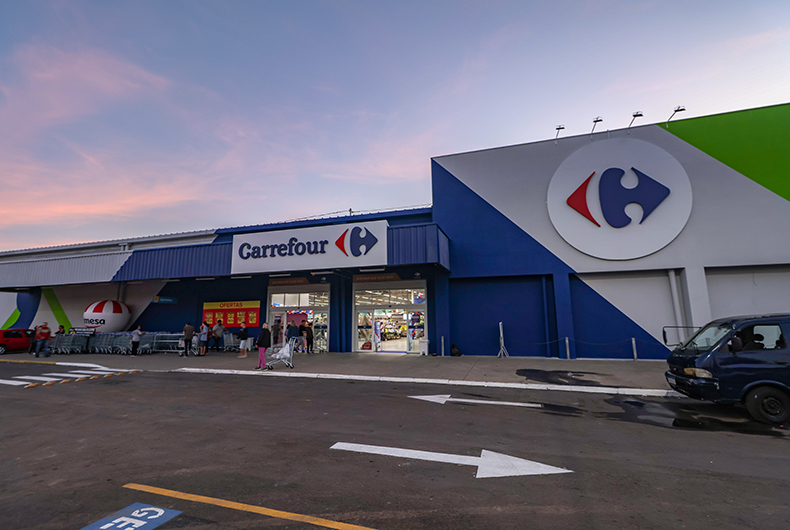


No endereço onde antes ficava o Hipermercado BIG, em Santa Cruz do Sul, agora funciona, oficialmente, uma loja Carrefour. Na manhã desta terça-feira, 6, aconteceu a reinauguração do empreendimento, já com a bandeira do grupo francês.
O Carrefour adquiriu o grupo BIG, então parte da Advent Internacional e do Walmart, em março de 2021. Além disso, Maxxi Atacado, que em março se transformou em Atacadão em Santa Cruz, e Nacional também passaram para o grupo francês. Nos últimos meses, já era possível ver produtos da marca própria do novo administrador na loja na Avenida Paul Harris. Agora, com a reinauguração, está concluída a transformação da marca na cidade.
LEIA MAIS: Santa Cruz passa a contar com unidade do Atacadão
Na cerimônia de reinauguração, a gerente Jocelia Gonçalves afirmou que a loja foi feita com muito carinho e dedicação. Além disso, os funcionários aguardam sugestões para que possam fazer o atendimento da melhor forma.
A ocasião ainda foi marcada pela alegria. Colaboradores da empresa fizeram uma dança em homenagem aos clientes. Houve presença de uma bandinha, animando todos os presentes. Também participaram os mascotes Fritz e Frida e o cachorro Caramelo, da Rádio Gazeta FM 101,7, que distribuiu pirulitos.
LEIA TAMBÉM: Apesar de menores, frutas cítricas estão com a qualidade mais alta nesta safra
Líder no mercado
A primeira unidade do Carrefour no Brasil foi inaugurada em 1975. Atualmente, são 100 lojas em 13 estados e no Distrito Federal, com a oferta de 55 mil itens em cada filial. O Grupo Carrefour Brasil é líder no mercado de distribuição de alimentos, além de possuir o Banco Carrefour e uma divisão imobiliária, o Carrefour Property.
Além disso, no varejo de alimentos, as bandeiras utilizadas são Carrefour como hipermercado, Carrefour Bairro e o supermercado Carrefour Market, além de lojas menores, como Carrefour Express. A rede ainda engloba o Atacadão, com atacado e atacado de autosserviço, rede de postos de combustíveis e drogarias. No mundo, o Grupo Carrefour atua em mais de 30 países, com lojas espalhadas pela Europa, Ásia e América Latina.
LEIA TAMBÉM: Entenda como vai funcionar o programa de descontos para compra de carro popular
Em Santa Cruz, apesar da implantação das unidades Atacadão e Carrefour, a expectativa é de que o supermercado Nacional, localizado no Centro, continue com a mesma denominação.
*Colaboraram o jornalista Ronaldo Falkenback e o comunicador Alex Brisolara