FOTOS: venâncio-airense coleciona almanaques de farmácia
Edição também recorda o pirocóptero; o Fusca Bate-e-Volta da Estrela; e a promoção que convidava a uma viagem pelas Américas
Por César Machado
Foto: Alencar da Rosa
Carmem Penck com o filho Estevão e o acervo de almanaques
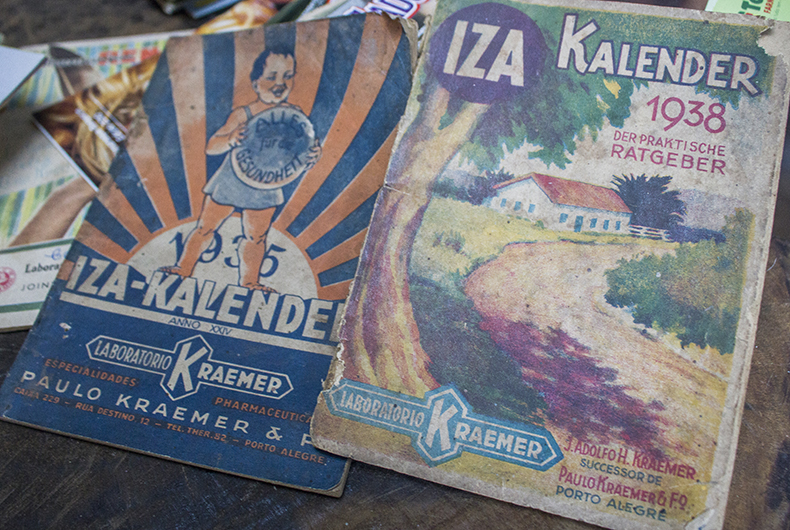
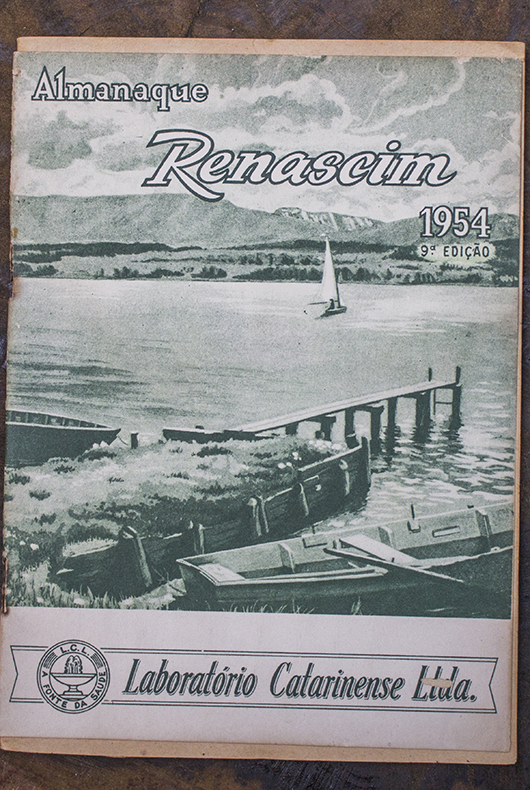
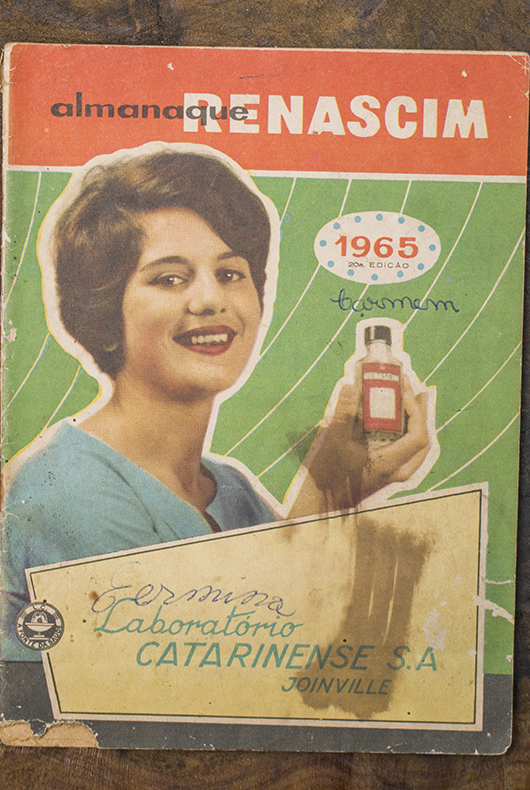
Olá! O tema central da edição de hoje certamente vai provocar muitas recordações entre os leitores. Quem não dispunha, em família, em décadas passadas, de um almanaque de farmácia? O mínimo que se pode dizer deles é que praticamente constituíam o Wikipédia do passado, de tal forma que se recorria a um almanaque para tirar dúvidas sobre assuntos variados. Sempre traziam dicas práticas em temas diversos, da saúde em si (afinal, eram distribuídos em farmácias) a épocas de plantio, fases da lua etc. A colecionadora Carmem Penck tem tanto o Renascim quanto o Sadol, e até em alemão! Além disso, hoje vamos recordar do pirocóptero, brinquedo dos anos 90; do Fusca Bate-e-Volta da Estrela; e da promoção que convidava a uma viagem pelas Américas. Vamos nessa?
Colecionismo
How LegitCasinos Evaluates Licensing Standards for Australian Online Gambling
Australia’s online gambling market operates under one of the more complex regulatory environments in the world, shaped by the Interactive Gambling Act of 2001 and its subsequent amendments, most notably the 2017 reforms that significantly tightened restrictions on in-play betting and unlicensed offshore operators. For Australian players navigating this landscape, the question of which casinos are genuinely compliant and which are simply claiming legitimacy has become increasingly difficult to answer without expert guidance. Review platforms that specialize in licensing evaluation serve a critical function here — not as directories of promotional offers, but as analytical resources that decode what regulatory compliance actually means in practice. Understanding how those evaluations are constructed, and what standards they apply, helps players make genuinely informed decisions rather than relying on surface-level reassurances.
The Regulatory Framework Governing Australian Online Gambling
The Interactive Gambling Act 2001 (IGA) remains the cornerstone of Australia’s federal approach to online gambling regulation. It prohibits Australian-based operators from offering real-money casino games and poker to Australian residents, which has created an unusual market dynamic: the majority of online casinos accessible to Australians are licensed offshore, while domestic regulation focuses primarily on sports betting through licensed providers like Tabcorp and its subsidiaries. This distinction matters enormously when evaluating licensing standards, because it means Australian players are almost exclusively interacting with jurisdictions outside Australian law.
Publicidade
The 2017 amendments to the IGA, introduced through the Interactive Gambling Amendment Act, expanded the definition of prohibited interactive gambling services and gave the Australian Communications and Media Authority (ACMA) new enforcement powers, including the ability to direct internet service providers to block access to unlicensed offshore gambling sites. Between 2019 and 2023, ACMA actioned the blocking of over 800 illegal gambling websites, a figure that underscores both the scale of the unlicensed market and the ongoing enforcement effort. However, blocking alone does not eliminate access — VPN usage among Australian gamblers is widespread — and it does not address the fundamental question of which offshore-licensed operators meet standards that genuinely protect players.
The jurisdictions most relevant to Australian players include Malta (through the Malta Gaming Authority, or MGA), Gibraltar, the Isle of Man, Curaçao, and Kahnawake. These are not equivalent in their regulatory rigor. The MGA, which operates under EU law and has been issuing licenses since 2004, imposes mandatory player fund segregation, dispute resolution mechanisms with binding authority, and regular third-party audits of random number generators. Curaçao, by contrast, has historically operated under a master license system that offered minimal consumer protections, though reforms initiated in 2023 under the new Curaçao Gaming Control Board framework are beginning to address some of these gaps. When a review platform evaluates licensing, it needs to account for these jurisdictional differences rather than treating any license as equivalent to any other.
How LegitCasinos Approaches Licensing Verification
LegitCasinos applies a tiered approach to licensing evaluation that distinguishes between the existence of a license and the quality of the regulatory framework behind it. This distinction is more consequential than it might appear. Many offshore casinos display licensing badges prominently, but a badge from a jurisdiction with weak enforcement capacity provides substantially less protection than one from a regulator with a track record of disciplinary action and accessible complaint mechanisms. The evaluation process begins with verifying that a license is active and in good standing — not simply that it was issued at some point in the past — by cross-referencing the casino’s claimed license number against the relevant regulator’s public database.
Publicidade
Active license verification is only the first layer. The next consideration is the regulatory history of the operator, including any sanctions, warnings, or compliance failures recorded by the licensing authority. The MGA, for instance, publishes a public register of disciplinary actions that includes details of fines and license suspensions. An operator that has faced regulatory action but remediated the underlying issue is in a different category from one with a clean record, and both differ from operators that have faced action in multiple jurisdictions simultaneously — a pattern that often signals systemic rather than isolated compliance failures.
The evaluation framework also considers whether the licensing jurisdiction has reciprocal information-sharing arrangements with Australian authorities or other regulators. This matters because a regulator that operates in isolation — one that cannot or will not cooperate with foreign enforcement agencies — provides a much weaker deterrent against misconduct. The MGA and the UK Gambling Commission, for example, participate in international regulatory cooperation frameworks, while some smaller jurisdictions have no formal mechanisms for cross-border cooperation at all. For Australian players specifically, whose own government cannot directly regulate the casinos they access, this kind of indirect accountability becomes a meaningful proxy for consumer protection.
The full methodology applied by LegitCasinos, including the specific criteria used to weight different licensing jurisdictions and the process for handling disputed cases, is documented at https://www.legit-casinos.com/, where the evaluation criteria are presented alongside individual casino assessments so readers can trace the reasoning behind each conclusion rather than simply accepting a rating at face value.
Publicidade
Specific Licensing Criteria Relevant to Australian Players
Beyond the jurisdictional tier, several specific licensing criteria have particular relevance for Australian players given the domestic regulatory context. The first is responsible gambling compliance. Australian gambling regulation has placed increasing emphasis on harm minimization since the Productivity Commission’s 2010 report on gambling, which estimated that problem gamblers account for approximately 40 percent of gambling revenue in Australia. Offshore operators that accept Australian players are not legally required to meet Australian responsible gambling standards, but some voluntarily adopt measures aligned with those standards — self-exclusion tools, deposit limits, reality checks, and access to resources like Gambling Help Online — while others provide only the minimum required by their licensing jurisdiction.
The MGA requires licensees to implement responsible gambling measures including mandatory self-exclusion options linked to the GAMSTOP-equivalent system in Malta, though this does not extend to Australian players in the same way it applies to Maltese residents. Gibraltar’s Gambling Commissioner requires operators to participate in the GamCare certification program and to implement specific affordability assessment protocols for high-spending customers. These requirements create a floor of consumer protection that operators in those jurisdictions must meet, regardless of the nationality of their players. Evaluating whether a casino meets these standards — not just whether it claims to — requires reviewing the actual tools available to players, not simply the policy statements in the terms and conditions.
Payment security and withdrawal reliability represent another licensing-relevant criterion. Reputable licensing jurisdictions require operators to demonstrate financial stability and to maintain player funds in segregated accounts separate from operational capital. This requirement exists to protect players in the event of operator insolvency — a scenario that has materialized in the Australian market context before, most notably during the collapse of several sports betting operators in the early 2010s. The MGA’s player fund protection requirements mandate that operators hold player funds in trust or through insurance arrangements, and the regulator publishes the protection level (ranging from “basic” to “segregated funds”) for each licensee. Curaçao’s historical framework had no equivalent requirement, which is one reason why payment delays and withdrawal disputes have been disproportionately associated with Curaçao-licensed operators in player complaint forums.
Publicidade
Game fairness certification is the third major licensing-related criterion. Licensing authorities vary significantly in their requirements for independent testing of random number generators and return-to-player percentages. The MGA requires all games to be certified by approved testing laboratories — a list that includes eCOGRA, BMM Testlabs, GLI, and iTech Labs — before they can be offered to players. These laboratories test not only that RNGs produce statistically random outcomes but also that the actual RTP of games matches the stated RTP within acceptable variance bounds. An operator that cannot demonstrate current, valid game certification from an accredited laboratory is one where the fairness of outcomes cannot be independently verified, regardless of what the license certificate says.
Practical Implications for Australian Players Choosing an Online Casino
Understanding licensing standards in the abstract is useful; translating that understanding into practical decision-making is where it becomes actionable. For Australian players, the first practical step is confirming that the casino they are considering holds an active license from a jurisdiction with meaningful regulatory infrastructure. This means checking the license number against the relevant regulator’s public database — not simply accepting the badge displayed on the casino’s website, since fraudulent license claims are not uncommon in the offshore market. The MGA’s public register is searchable by operator name and license number and is updated in near real-time when licenses are issued, suspended, or revoked.
The second practical consideration is the casino’s complaint resolution mechanism. Licensing jurisdictions with strong consumer protection frameworks provide players with access to an independent dispute resolution service (ADR) as a condition of the operator’s license. The MGA mandates ADR access through approved providers, and players can escalate unresolved complaints to the MGA itself if the ADR process does not produce a satisfactory outcome. This creates a meaningful accountability chain that does not exist in jurisdictions where the regulator has no formal complaint-handling role. Before depositing funds, Australian players should verify not only that a complaint mechanism exists but that it is accessible to players from their country — some ADR services restrict their jurisdiction to EU residents, which would exclude Australian players from using them.
Publicidade
The third consideration relates to the practical enforcement of terms and conditions. A common source of disputes between players and offshore casinos involves bonus wagering requirements and the conditions under which winnings can be withdrawn. Licensing jurisdictions with strong consumer protection frameworks impose requirements on the clarity and fairness of bonus terms — the MGA’s Directive on Bonus Terms and Wagering Requirements, updated in 2018, prohibits certain types of retroactive term changes and requires that bonus conditions be presented clearly before acceptance. Operators licensed in jurisdictions without equivalent requirements are not bound by these standards, which means the terms they offer are subject only to whatever contractual law applies in their jurisdiction of incorporation — often a less favorable standard for the player.
LegitCasinos incorporates all of these dimensions into its licensing evaluations, cross-referencing the formal licensing status of operators with their behavioral track record on complaints, withdrawal processing, and terms compliance. This approach reflects a recognition that a license is a necessary but not sufficient condition for trustworthiness — the conduct of the operator under that license is equally important in determining whether Australian players are genuinely protected.
Australia’s online gambling regulatory environment will continue to evolve. ACMA has signaled ongoing expansion of its blocking regime, and there is active policy discussion about whether a formal licensing framework for offshore operators serving Australian players could be introduced — a model that New Zealand has also been examining. Whatever regulatory changes emerge, the underlying principles for evaluating licensing quality will remain consistent: the regulatory capacity of the issuing jurisdiction, the operator’s compliance history, the accessibility of dispute resolution mechanisms, and the practical protections available to players at the point of engagement. Players who understand these criteria are substantially better positioned to navigate a market that, despite significant enforcement activity, remains populated by operators with widely varying standards of accountability and consumer protection.
Hoje, vamos falar de uma coleção de almanaques de farmácia que atravessou nada menos do que quatro gerações. Estive na semana passada no interior de Venâncio Aires, na residência da agricultora Carmem Wessling Penck, de 43 anos, casada com Rosmar André Penck e mãe do pequeno Estevão, para conhecer um pouco mais desse item. Vale lembrar que ele foi um grande recurso de informações para as famílias de antigamente, pois era nos almanaques que se podia encontrar dicas de qual a melhor época para o plantio de uma determinada cultura ou o melhor medicamento para alguma enfermidade, assim com outras valiosas informações.
Carmem conta que os almanaques começaram a ser guardados pela sua bisavó materna, Antônia Pilz, isso em pleno século 19, quando o almanaque Iza ainda tinha versões em português e na língua alemã e era distribuído pelo laboratório Kraemmer. Mais tarde, quem adotou os almanaques foi sua avó materna, Wilma Parckert, que posteriormente os passou para as mãos de sua mãe, Remilda Wessling.
E foi na adolescência que Carmem tomou gosto pelos almanaques e começou a colecioná-los. Hoje, possui 69 almanaques do Renascim e do Sadol, dos laboratórios Catarinense, e agora está à caça dos poucos que lhe faltam para completar a coleção. Os almanaques eram e ainda são distribuídos em farmácias anualmente. Carmem gosta tanto deles que, ao escrever para os laboratórios, na expectativa de conseguir os que lhe faltam, sugeriu um artigo para o mesmo, que foi publicado na edição de 2011. Faltam para ela apenas as edições de 1947, 1948, 1949, 1950, 1951, 1953,1959 e 1967. Caso alguém os possua, ela se dispõe a adquirir os exemplares. Recados podem ser repassados ao Espaço Nostalgia, nos contatos no fim desta publicação.
Foi nos anos 90 que um pirulito fez muito sucesso com a criançada. Junto com ele, vinha de brinde uma hélice de plástico, que, somada ao palito, se transformava em um pirocóptero. Distribuído em várias cores, dava até para colecionar, isso se o pirocóptero não caísse em cima de um telhado. Confira no vídeo abaixo uma propaganda da época.
A série Volks Bate-e-Volta, fabricada pela Estrela, fez muito sucesso nos anos 80. Estava disponível em quatro versões: você podia escolher entre o Fusca dos bombeiros, o Fusca da polícia, o Fusca da ambulância ou o Fusca sedã. O mais impressionante desse brinquedo, que funcionava a pilhas, é que ele nunca ficava no meio do caminho; ao bater em um obstáculo, ele ia para frente ou para trás.
Uma divertida viagem pelas Américas com a Pepsi e a Mirinda
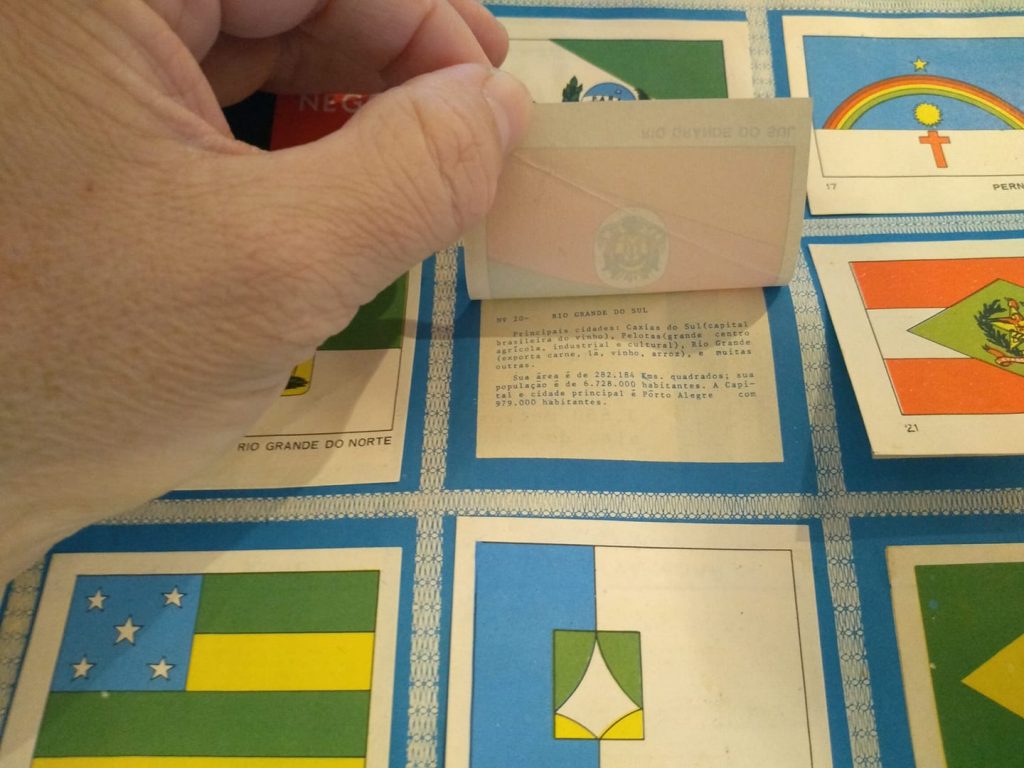
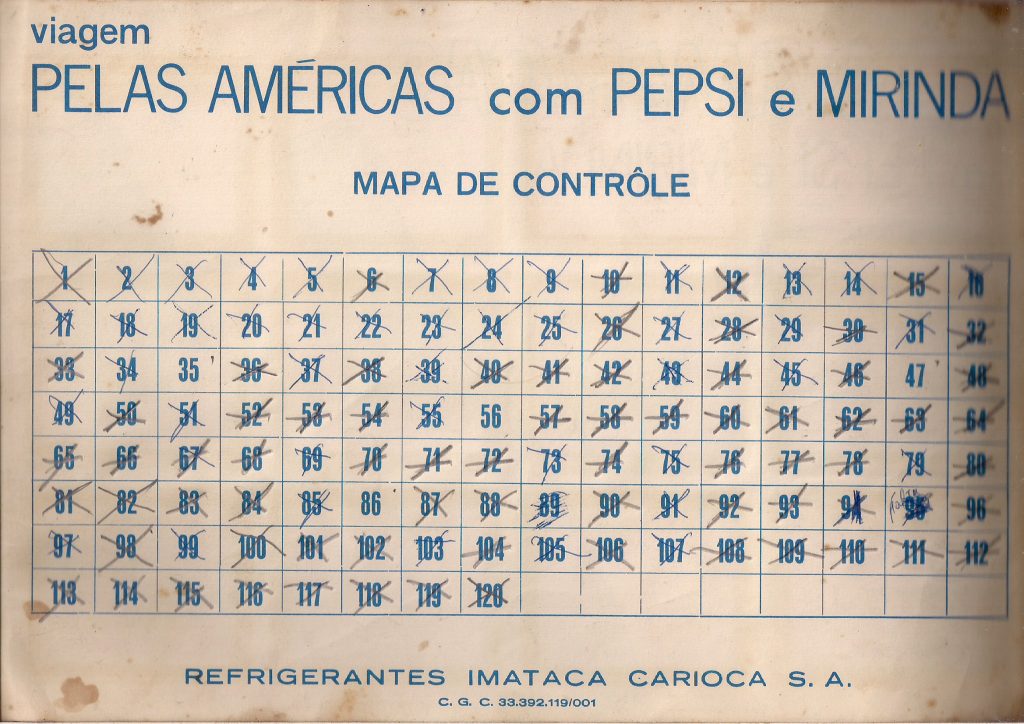
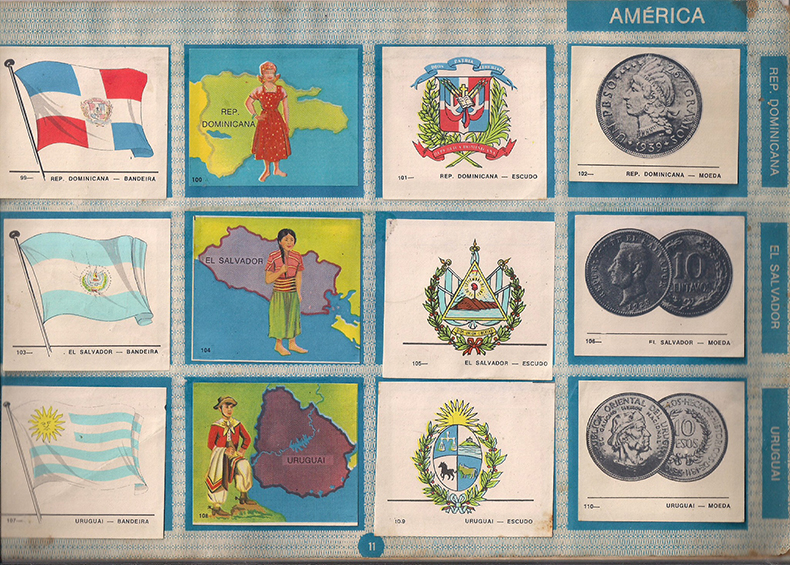
“Viagem pelas Américas”: foi com esse slogan que a Pepsi e a Mirinda, nos anos 60, lançaram essa promoção. Era uma coleção que levava cultura às crianças do Brasil. Para ganhar o álbum e o pacote com as figurinhas, era necessário juntar seis tampinhas dos refrigerantes da promoção. No verso de cada figurinha, vinham informações da imagem. Por exemplo, na bandeira do RS, eram descritas as principais cidades: Caxias do Sul (capital do vinho), Pelotas (grande centro agrícola, industrial e cultural), Rio Grande (exporta carne, lã, vinho e arroz) e muitas outras. Sua área é de 282.184 km², sua população é de 6.728.000 habitantes. A capital e cidade principal é Porto Alegre, com 979 mil habitantes.
Nós utilizamos cookies e outras tecnologias semelhantes para melhorar sua experiência em nossos serviços, personalizar publicidade e recomendar conteúdos de seu interesse. Para saber mais, consulte a nossa Política de Privacidade.